
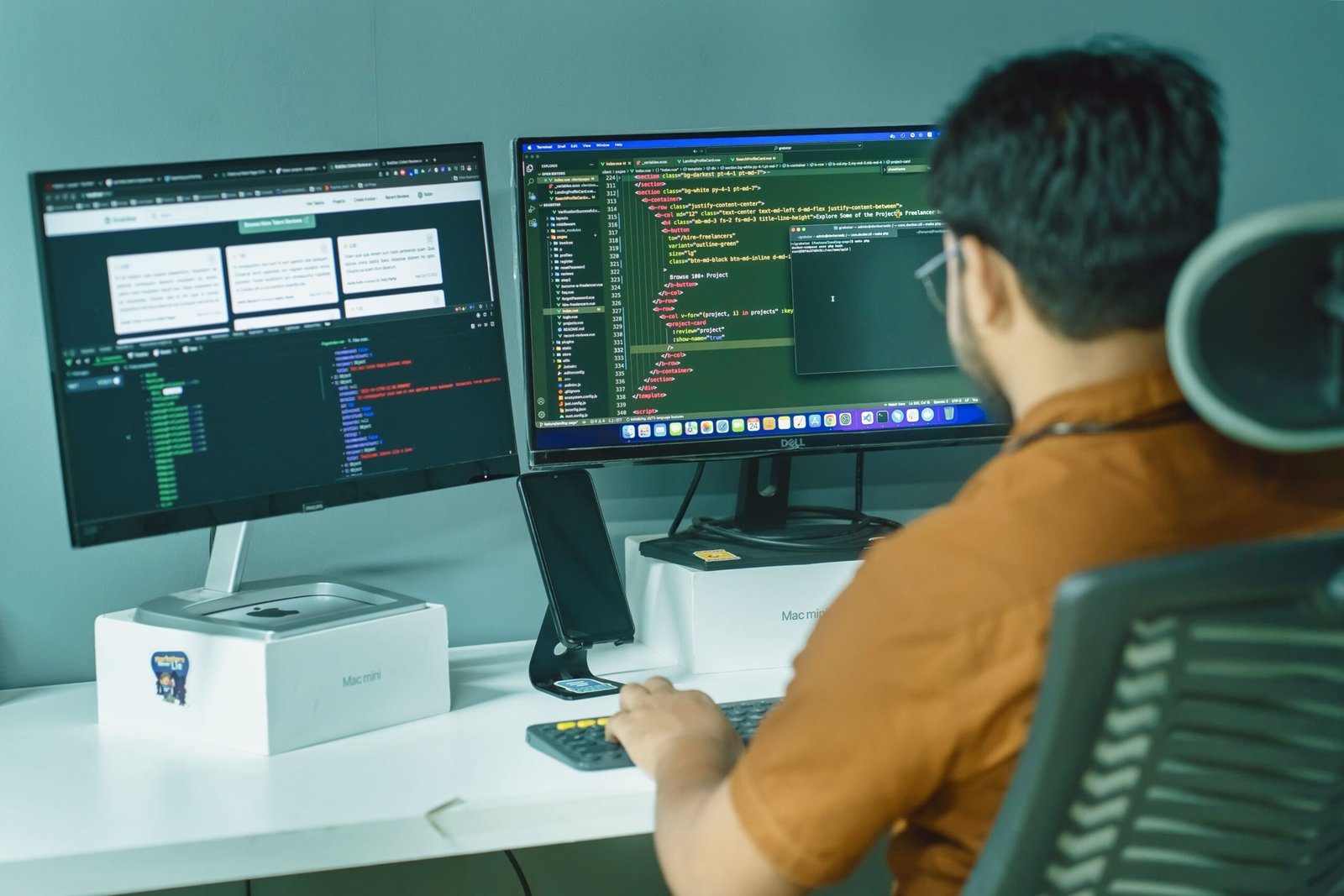
Software has become part of the way businesses operate, serve customers and plan for growth. From a small company replacing spreadsheets with a business management tool to a large organisation modernising its existing systems, the right technology can make everyday work easier to manage. It can help reduce repetitive tasks, organise information, improve reporting and create better digital experiences for customers.
Mauritius has a growing technology sector serving local businesses as well as organisations operating across Africa, Europe and the wider Indian Ocean region. Companies can find providers working on custom business applications, mobile apps, enterprise platforms, cloud infrastructure, data systems, API integrations and digital transformation projects. However, these services are not interchangeable. A business looking for a straightforward inventory system may need a very different development partner from a bank, government department or international company managing complex technology requirements.
Choosing from the best software development companies in Mauritius therefore requires more than comparing company names. Buyers should look at the provider’s technical capabilities, relevant project experience, communication process, approach to data security, pricing structure and commitment to support after launch.
This guide compares five companies serving the Mauritian market: Web Service Ninjas, The Mosaic Code, nVisionIT, Astek Mauritius and Innov8-IT. Each profile includes an editorial score out of 100, a description of the company’s focus, contact information where available, services, official website, Google Maps search and Google Business Profile search.
The purpose is to help businesses prepare for a more informed conversation with prospective developers. The rankings are editorial assessments for this article, not official industry awards or independently audited performance scores. Readers should review proposals, technical documentation, references and contractual terms before selecting a provider.
1. Web Service Ninjas – Best for Custom Software and Digital Solutions
Web Service Ninjas offers software development alongside website development, mobile applications, e-commerce and related digital services. Its published Mauritius service page describes custom software, CRM solutions and business applications for companies seeking to improve their digital operations.
Average Editorial Score: 97/100
Address: 150 Uxbridge Rd, Hayes UB4 0JQ, United Kingdom
Location:
United Kingdom
Contact: info@webserviceninjas.com
Website: Official website – Web Service Ninjas
Google Business Profile search: Click here
Google Maps:
What makes Web Service Ninjas worth considering?
Businesses often begin with separate tools for customer records, sales, stock, appointments, online payments and reporting. That arrangement can work at first, but it becomes harder to maintain as the company grows. Staff may have to enter the same information several times, managers may struggle to obtain an accurate overview, and different systems may not share data properly.
Custom software can help bring these activities into a more organised workflow. Web Service Ninjas describes services that include custom software, CRM systems, websites, e-commerce and mobile application development. Its Mauritius service page also provides information about website and software solutions for businesses operating in the market.
For a prospective client, the important question is not simply whether a provider offers software development. It is whether the provider can understand the actual business problem and translate it into a workable technical solution.
For example, a company that receives enquiries from several channels may need a central customer management system. A retailer may require a stock and sales application. A service business may want appointment scheduling, customer notifications and reporting in one place. Each project requires a clear understanding of users, data, workflows and the limitations of the systems already in place.
Services to discuss with the company
The company’s published service information identifies the following areas:
- Custom software and business applications
- CRM software
- Website and web application development
- Android and iOS application development
- E-commerce development
- Event registration and related business software
- Digital marketing and online business support
- Ongoing changes or additional features, subject to the project agreement
The availability of a specific feature, technology or integration should be confirmed during consultation. Businesses should request a written scope that explains exactly what will be delivered rather than relying on a general list of services.
How to assess the fit
Web Service Ninjas may be worth approaching when a business wants to discuss several connected digital requirements with one provider. This can be useful when software needs to work alongside a website, online store or customer acquisition process.
Before making a decision, ask the team to demonstrate a relevant example, explain how it approaches software testing, and clarify whether the project will use a new application or integrate with existing systems. If you require a mobile app, ask whether it will be built for Android, iOS or both, and how future operating system updates will be handled.
It is also sensible to establish who owns the source code, database structure, design files and other deliverables after payment. These terms should appear in the contract, together with access credentials, backup arrangements and any third-party licensing costs.
Questions to ask before starting
- What is included in the quoted price?
- Will the company provide a written project specification?
- How will progress be reviewed during development?
- Who will test the software before launch?
- What happens if the requirements change?
- Will source code and documentation be handed over?
- What support is included after launch, and what costs extra?
Best suited to: Businesses exploring custom software alongside websites, e-commerce, CRM or mobile application requirements.
2. The Mosaic Code – Best for Bespoke Business Software and Operational Platforms
The Mosaic Code is a custom software studio in Port Louis that builds business platforms, web and mobile applications, workflow automation and cloud-based systems designed around the way an organisation operates.
Average Editorial Score: 95/100
Address: Port Louis, Mauritius.
Location:
Port Louis
Contact: +23057115272
Email: hello@themosaiccode.co
Website: Official website – The Mosaic Code
Google Business Profile search : Click here
Google Maps:
What makes The Mosaic Code stand out?
Not every business problem can be solved well by purchasing another off-the-shelf application. Sometimes the difficulty lies in the way several departments work together, or in the fact that the company’s processes are too specific for a standard package.
The Mosaic Code focuses on custom operational platforms intended to replace spreadsheets, disconnected tools and manual processes. Its website describes projects involving freight operations, medical order and traceability workflows, and workforce coordination. These examples provide useful context for businesses considering a bespoke platform.
A logistics company, for instance, may need to track shipments, costs and client records in one place. A distributor may need to follow an order from receipt through stock allocation and delivery. A company operating teams across several sites may need a shared system for schedules, assignments and field updates.
In each case, the challenge is not simply to build screens. The developer must understand how work is performed, identify which information needs to be shared, establish permissions and make the software practical for everyday users.
Services offered
The company’s published services cover:
- Bespoke business software and operational platforms
- Custom web applications
- Mobile applications for iOS and Android
- Workflow and process automation
- ERP-style business platforms
- API and third-party integrations
- Cloud deployment and infrastructure
- Data analytics and business intelligence
- AI integrations and automated workflows
- Hosting, updates, backups and monitoring, according to the selected arrangement
- Technical consulting and system modernisation
The company also describes a development process that moves from discovery and design to building, deployment and support. That staged approach can be helpful for projects where requirements need to be understood before a final specification is agreed.
Why discovery matters
A custom software project should begin with questions, not assumptions. Before recommending a technical solution, the development team should understand who will use the system, what they currently do, where mistakes occur and which tasks take the most time.
A discovery session may cover user roles, current software, reports, approval steps, integrations, data migration and future growth. The result should be a clear plan that separates essential features from optional improvements.
For clients, this work can prevent an expensive mistake: paying to build a system that technically functions but does not fit the way the business actually operates.
How to evaluate The Mosaic Code for your project
The Mosaic Code may be a relevant candidate for companies whose operations have become difficult to manage with spreadsheets or disconnected applications. Its published focus on operational platforms makes it particularly relevant when the project involves workflows rather than a simple brochure website.
Ask for a demonstration of a comparable project and discuss the level of customisation needed. Find out whether the proposed system will be hosted by the developer, in your own cloud environment or on infrastructure you control. Confirm how user permissions, data backups, security updates and system monitoring will be handled.
If AI features are proposed, ask what information the feature will process, whether that information will be sent to a third-party service and how users can check the results. AI functionality should solve a defined business problem rather than be added simply because it is fashionable.
Best suited to: Companies that need operational software, workflow automation, connected web and mobile applications, or a system tailored to their internal processes.
3. nVisionIT – Best for Enterprise Software and Digital Transformation
nVisionIT is an enterprise software and digital transformation provider with a Mauritius office in Ebene. Its published capabilities include enterprise applications, system integration, cloud modernisation, data platforms, identity-related systems and business process digitisation.
Average Editorial Score: 94/100
Address: Unit 310, Ebene Junction Ebene, Mauritius
Location:
Ebene Junction Ebene
Contact: +23052750039
Email: info@nvisionit.mu
Website: Official website – nVisionIT
Google Business Profile search : Click here
Google Maps:
What makes nVisionIT relevant to enterprise buyers?
Enterprise software projects often involve more than creating a new application. Organisations may need to connect old and new systems, manage large volumes of records, establish user permissions, produce audit trails and ensure that critical services remain available.
nVisionIT positions itself around enterprise software engineering and digital transformation. Its Mauritius-focused information describes work related to identity, case management, attendance platforms, heritage services and other systems used in local organisational contexts.
This makes the company relevant to buyers considering larger projects where integration, governance and operational reliability are central requirements. Public bodies, regulated organisations and businesses with several departments may need a development partner capable of understanding both technical architecture and operational constraints.
Services and technical capabilities
The company’s published information covers areas such as:
- Enterprise software development
- Custom business applications
- Digital transformation consulting
- Systems integration
- Cloud migration and modernisation
- Data platforms, analytics and AI
- Identity and access management solutions
- Document and case management systems
- Workflow digitisation
- Cybersecurity-related capabilities
- Enterprise application support and managed services
The exact scope available for a new project should be confirmed directly with the company. Buyers should also clarify which parts of a proposed solution will be developed specifically for them and which parts will use existing products or accelerators.
Why integration deserves attention
A new application may work well on its own but still create problems if it cannot exchange information with other systems. For example, a customer onboarding tool may need to communicate with a customer database, document repository, payment platform and reporting system.
Integration planning should identify the source of truth for each type of data, the frequency of updates, error-handling arrangements and who is responsible when a connected service changes. Without this planning, staff may be forced to enter the same information twice or manually reconcile conflicting records.
For enterprise projects, these details can be as important as the application interface itself.
Security, compliance and project governance
Businesses handling personal, financial or confidential information should discuss security requirements early. Topics may include role-based access, authentication, encryption, audit logging, backup testing, incident response and data retention.
Mauritius has its own data protection framework, so organisations should understand their obligations under the Data Protection Act 2017 and seek appropriate professional guidance where necessary. A vendor’s general security claims should not replace a review of the actual architecture, contract and responsibilities for the project.
Ask nVisionIT what documentation can be supplied during procurement, what assurance arrangements apply to the proposed service and how hosting or data residency will be agreed. These questions are particularly important where the system will hold sensitive information or support public-facing services.
How to assess the fit
nVisionIT may be worth considering for organisations that need a structured enterprise delivery approach, complex integrations or modernisation of established systems. It may be less relevant for a very small project that needs only a simple website or basic application.
When requesting a proposal, define the business outcome rather than simply listing technology preferences. Explain what needs to become faster, more reliable or easier to measure. Ask the vendor to describe the proposed architecture, delivery stages, dependencies, risks and criteria for accepting the completed work.
Best suited to: Enterprises, public-sector organisations and businesses with complex workflows, integration requirements or significant data-governance needs.
4. Astek Mauritius – Best for Software Engineering and Enterprise Technology Projects
Astek Mauritius is part of the international Astek Group and provides IT services and engineering capabilities. Its published service portfolio covers enterprise application development, mobile applications, data and AI, quality assurance, infrastructure, cybersecurity and technical consulting.
Average Editorial Score: 93/100
Address: One Exchange Square, 12th Floor, Tower A, Wall St, Ebene, Mauritius
Location:
Ebene
Contact: +2304019600
Email: contact@groupeastek.mu
Website: Official website – Astek Mauritius
Google Business Profile search : Click here
Google Maps:
What makes Astek Mauritius worth considering?
Some projects need a compact development team, while others require several types of technical expertise working together. A large application may need business analysis, architecture, front-end and back-end development, database design, testing, infrastructure and ongoing maintenance.
Astek Mauritius operates as part of a wider technology group. Its official website describes software engineering and consulting services for clients working on digital products and business systems. The company also lists expertise across enterprise applications, mobile development, quality assurance, data and business intelligence, infrastructure and embedded systems.
This breadth can be relevant when a business wants to coordinate several technical disciplines within one delivery arrangement. However, buyers should confirm which skills are available for the particular engagement and how the proposed team will be staffed.
Services and areas of expertise
Astek Mauritius publishes capabilities covering:
- Enterprise application design and development
- Web and mobile application development
- Software engineering and technical consulting
- Business and system analysis
- System architecture and technical specifications
- Manual and automated software testing
- Performance testing and quality assurance
- Data engineering, analytics and business intelligence
- Infrastructure and cloud-related services
- DevOps and technical operations
- Cybersecurity-related services
- Product and process engineering
Its website lists technologies and frameworks used in enterprise and mobile development. The right stack for your project should still be chosen according to requirements, existing systems, team skills, maintainability and long-term cost rather than the popularity of a particular language.
Why software testing matters
A project should not be considered finished simply because the main screens load or a demonstration works. Testing needs to establish whether the application behaves correctly in realistic conditions, including unusual inputs, simultaneous users, failed connections and unexpected errors.
Depending on the project, testing may cover functional behaviour, security, performance, usability, browser compatibility, mobile devices and integration with other systems. A reliable development proposal should explain who performs these tests, how defects are recorded and how the client approves a release.
For software that supports essential business operations, it is also useful to ask about deployment procedures, rollback plans and monitoring after launch.
How to assess Astek Mauritius for your project
Astek Mauritius may be a suitable company to investigate when the project requires coordinated engineering expertise, ongoing product development or a combination of software development and testing.
Before signing, clarify whether the arrangement will use a dedicated team, a defined project scope or another delivery model. Ask who will manage priorities, how progress will be reported, how changes will be estimated and what happens when a specialist is unavailable.
If your team works in English and French, confirm the languages available for meetings, documentation and support. If the project involves an existing technology stack, share the architecture and ask how the company would approach integration or modernisation.
Best suited to: Organisations seeking software engineering, enterprise applications, testing, data capabilities or multi-disciplinary technology delivery.
5. Innov8-IT – Best for Bespoke Digital Products and Specialised Software
Innov8-IT is a Mauritius-based software development firm focused on bespoke digital products. Its published portfolio includes enterprise learning software, cloud productivity tools, brand education platforms and mobile applications.
Average Editorial Score: 91/100
Address: Mauritius
Location: Mauritius.
Contact: hello@innov8-it.mu
Website: Official website – Innov8-IT
What makes Innov8-IT different?
A business may have a clear idea for a product but find that existing software does not provide the right combination of features, user experience and flexibility. This can happen when building a specialised learning platform, a subscription-based application, an internal knowledge system or a product intended for a particular audience.
Innov8-IT describes its work as bespoke software development. Its public portfolio includes products in enterprise learning, cloud productivity, brand education and mobile gaming. That range suggests a focus on building defined digital products rather than limiting its work to standard websites.
For prospective clients, the most useful next step is to identify the closest example in the company’s portfolio and ask what parts of that experience would transfer to the proposed project.
Services and products to explore
Innov8-IT’s published service information includes:
- Bespoke software development
- Full-stack web applications
- SaaS platform development
- API design and integration
- Legacy system modernisation
- Native and cross-platform mobile apps
- Database design and performance optimisation
- AI feature integration and intelligent automation
- Document processing and data extraction
- Data analysis and visualisation
- Technical consulting and documentation
- Software maintenance and support
- Workflow automation and third-party integrations
The company also presents products such as AIIT-LMS, CognioCloud, Brandemy and Trivia Royale on its official website. These products cover different use cases, so a buyer should review the specific product or project that most closely matches their requirements.
Why product thinking is important
A software product needs more than a successful first release. It must be understandable to users, maintainable by the technical team and able to evolve as requirements change.
For example, a SaaS platform may need account management, permissions, subscription handling, usage limits, reporting and customer support tools. A learning platform may need course management, progress tracking, assessments and certificate generation. Each feature creates design and operational decisions that affect the long-term product.
Ask the development team how it plans for upgrades, data migration, monitoring and user feedback. Confirm whether ongoing maintenance is included in the initial agreement or provided under a separate service contract.
How to evaluate Innov8-IT
Innov8-IT may be worth considering for businesses that need a purpose-built application, a SaaS product or a specialised platform rather than an off-the-shelf package.
During an initial consultation, explain the problem, the intended users and the most important outcomes. Ask the company to separate the minimum viable product from later enhancements. This helps you test the core idea before committing to a larger feature set.
Also discuss the use of third-party AI services, APIs, hosting platforms and commercial libraries. These dependencies can affect cost, privacy, portability and future maintenance. Ensure the agreement identifies who controls accounts and credentials and what happens if you change providers.
Best suited to: Businesses and organisations planning specialised software products, SaaS platforms, mobile apps or applications with defined technical requirements.
Summary Comparison Table: Best Software Development Companies in Mauritius
| Rank | Company | Editorial Score / 100 | Main Strength | Location | Official Website |
|---|---|---|---|---|---|
| 1 | Web Service Ninjas | 97 | Custom software and related digital services | Mauritius and international markets | Visit website |
| 2 | The Mosaic Code | 95 | Bespoke operational platforms and automation | Port Louis | Visit website |
| 3 | nVisionIT | 94 | Enterprise software and digital transformation | Ebene | Visit website |
| 4 | Astek Mauritius | 93 | Software engineering and enterprise technology | Ebene | Visit website |
| 5 | Innov8-IT | 91 | Bespoke software products and SaaS | Mauritius | Visit website |
How to Choose a Software Development Company in Mauritius
The right development partner should understand your business problem, explain the proposed solution clearly and provide a realistic plan for delivery and maintenance. Before requesting quotes, prepare a short project brief covering the main users, current difficulties, essential features, preferred timeline and available budget.
1. Define the business problem first
Avoid starting with a long list of technologies. Instead, explain what is not working today and what you want to improve.
For example, you might need to reduce manual data entry, provide customers with self-service access, improve stock visibility or replace an ageing application. A good developer should help translate these goals into functional requirements and measurable outcomes.
2. Review relevant project experience
A company may have impressive general capabilities but limited experience with your particular type of software. Ask for examples of projects that are similar in scale, complexity or industry.
Review what the company actually delivered, which challenges it addressed and whether it can explain the decisions behind the solution. A portfolio should help you understand capability, not just display attractive screenshots.
3. Understand the development process
Ask how the project will move from discovery to design, development, testing, deployment and support. Confirm how often you will see progress, who approves features and how changes will be managed.
A written specification and agreed acceptance criteria reduce the risk of different expectations emerging late in the project.
4. Compare the full cost
The lowest initial quote may not represent the lowest total cost. Hosting, software licences, data migration, security reviews, support, future upgrades and third-party integrations can all affect the budget.
Request a breakdown of what is included, what is excluded and which costs may recur. If a fixed price is offered, understand how scope changes will be handled.
5. Check data ownership and security
Before sharing customer information or business records, ask how data will be stored, accessed, backed up and protected. Clarify the hosting model, account ownership, access permissions and responsibilities for incident response.
The contract should explain ownership of the source code, data, documentation and other deliverables. It should also describe how you can obtain your data and transition to another provider if necessary.
6. Plan for maintenance after launch
Software requires attention after release. Operating systems change, third-party APIs evolve, security updates become necessary and users request improvements.
Ask whether the company offers a support agreement, how defects are reported, what response times apply and which activities are chargeable. Make sure the business will have access to the documentation and credentials needed to operate the system.
Questions to Ask Before Signing a Software Development Contract
A development proposal should be specific enough to help you understand what you are buying. Consider asking these questions during the selection process:
- What exact features and deliverables are included?
- What assumptions has the proposal made about our existing systems?
- Who is responsible for project management and technical decisions?
- How will we review and approve the work?
- What testing will be performed before launch?
- Will data migration and staff training be included?
- Who owns the source code and intellectual property?
- Which third-party subscriptions or licences will we need?
- How will backups, security updates and incidents be handled?
- What support is included after deployment?
- How will additional features or scope changes be priced?
- What is the process for handing over the project if the relationship ends?
The answers should be documented in the proposal or contract rather than left to informal conversations. This is particularly important when software will become central to daily operations.
Final Thoughts
Choosing among the best software development companies in Mauritius starts with understanding what the business needs the software to achieve. Web Service Ninjas is an option to explore for custom software and connected digital services. The Mosaic Code focuses on bespoke operational platforms and workflow automation. nVisionIT publishes enterprise software and digital transformation capabilities, while Astek Mauritius offers software engineering and a wider technical service portfolio. Innov8-IT focuses on bespoke products, applications and SaaS platforms.
No single provider is the right choice for every project. A small business may prioritise straightforward communication and a manageable budget, while a larger organisation may focus on integration, governance, technical assurance and long-term support. Compare providers against the same requirements, ask for relevant examples and ensure that the final proposal explains the scope and responsibilities clearly.
Before signing a contract, agree on deliverables, timeline, costs, testing, source code ownership, data protection and post-launch maintenance. These practical details can make a greater difference to the success of a project than a company’s position in a list.
How Does Mauritius Ranking Work?
Our rankings are based on various factors, including ratings, customer reviews, reputation, service quality, relevance, and other relevant criteria. The factors considered may vary depending on the business category, ensuring that each category is evaluated using criteria relevant to its nature and services.
View Ranking MethodologyEnjoying Mauritius Ranking?
If you find our local guides and rankings helpful, add Mauritius Ranking as a Preferred Source on Google to see more of our latest content.
Found this article useful?
If this content helped you, you may support the developer by contributing the cost of a coffee.
Pay $5
