
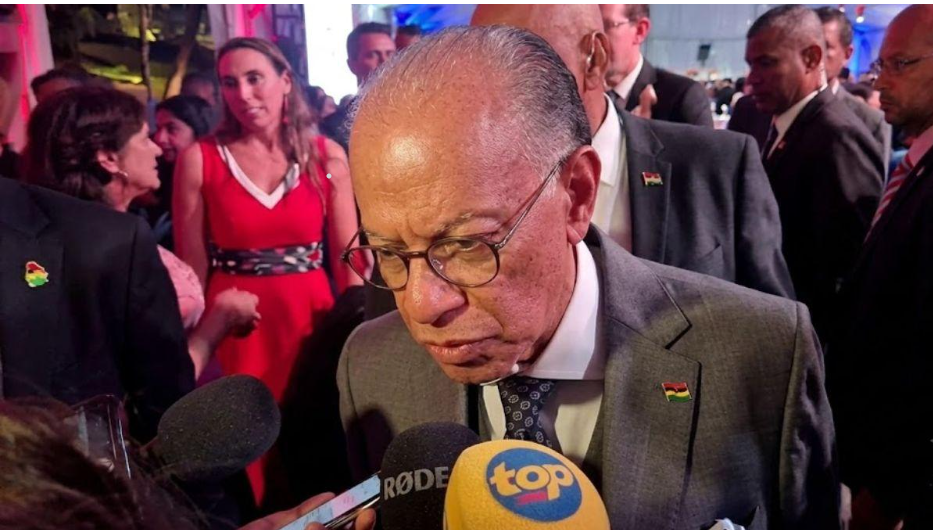
A major political confrontation has erupted in Mauritius as Prime Minister Navin Ramgoolam forcefully defended the government’s controversial pension reform measures against sharp criticism and political attacks from opposition leader Pravind Jugnauth.
The increasingly heated debate over pension reform has rapidly evolved into one of the most politically sensitive national issues currently facing Mauritius. At the center of the conflict are proposed changes to:
- Retirement age eligibility
- Basic Retirement Pension (BRP)
- Future State Age Pension systems
- Social welfare funding
- Fiscal sustainability policies
The dispute has triggered intense national debate involving:
- Trade unions
- Economists
- Pensioners
- Political parties
- Civil society groups
- Business organizations
As both political leaders exchange strong public statements, the pension reform controversy is now shaping the broader national conversation about:
- Economic stability
- Social justice
- Public finances
- Welfare protection
- Political leadership
- Future governance priorities
Pension Reform Becomes Major Political Battlefield
The pension reform measures introduced by the Ramgoolam administration represent one of the most significant changes to Mauritius’ social welfare structure in decades.
The reforms reportedly include:
- Gradual increase of pension eligibility age from 60 to 65
- New income support mechanisms
- Long-term State Age Pension restructuring
- Means-tested support systems
- Flexible retirement frameworks
The government argues these reforms are necessary because Mauritius faces:
- Rapid population ageing
- Rising pension costs
- Increasing healthcare expenditure
- Public debt pressure
- Long-term fiscal sustainability risks
However, opposition parties and critics argue the reforms unfairly burden ordinary citizens and threaten retirement security.
Ramgoolam Defends Economic Necessity of Reform
Prime Minister Navin Ramgoolam has strongly defended the reforms, insisting that difficult decisions are required to protect the long-term future of the country’s pension system.
Ramgoolam reportedly argued that without reform:
- Pension costs could become unsustainable
- Public finances may deteriorate further
- Future generations could face economic instability
- Social welfare systems may weaken
Government officials repeatedly emphasize that Mauritius can no longer rely indefinitely on older pension models given changing demographic realities.
Ramgoolam has framed the reforms as:
- Economically responsible
- Financially necessary
- Long-term oriented
- Designed to preserve pension stability
The Prime Minister also stressed that many countries worldwide have already:
- Raised retirement ages
- Modified pension systems
- Reduced universal welfare obligations
due to similar demographic and fiscal pressures.
Pravind Jugnauth Launches Fierce Criticism
Former Prime Minister Pravind Jugnauth has emerged as one of the strongest political critics of the pension reform measures.
Jugnauth reportedly accused the government of:
- Betraying pensioners
- Weakening social protections
- Burdening workers unfairly
- Ignoring ordinary citizens’ struggles
- Failing vulnerable communities
The opposition leader argued that raising retirement age from 60 to 65 would create major hardship for:
- Manual laborers
- Low-income workers
- Elderly citizens
- Citizens with health issues
Jugnauth reportedly claimed many Mauritians physically cannot continue working until age 65, particularly in labor-intensive industries.
The former Prime Minister has also questioned:
- The timing of the reforms
- Government economic management
- Fiscal planning decisions
- Consultation processes
Public Anxiety Growing Over Retirement Security
The pension reform debate has generated significant public concern because pensions remain deeply connected to:
- Household financial security
- Elderly welfare
- Family stability
- Long-term retirement planning
Many citizens fear:
- Delayed access to pension income
- Rising living costs
- Financial insecurity after retirement
- Reduced social protection
The controversy has become particularly emotional because the Basic Retirement Pension has long been viewed as one of Mauritius’ most important social welfare guarantees.
For decades, citizens expected pension eligibility at age 60 as a fundamental social right.
Trade Unions Intensify Opposition
The dispute between Ramgoolam and Jugnauth occurs alongside growing labor union mobilization against the reforms.
Several trade unions reportedly united under a common platform opposing:
- Retirement age increases
- Pension restructuring
- Means-tested systems
- Reduced universal entitlement
Union leaders argue the reforms may disproportionately affect:
- Low-income workers
- Construction workers
- Agricultural laborers
- Tourism employees
- Informal sector workers
Labor organizations warn that delayed retirement could worsen:
- Elderly poverty
- Financial hardship
- Social inequality
Trade unions continue calling for:
- National consultation
- Suspension of implementation
- Preservation of universal pension rights
Government Introduces Income Support Measures
To address criticism, the government introduced an Income Support scheme targeting citizens affected by delayed pension eligibility.
The program reportedly provides:
- Temporary monthly support
- Means-tested financial assistance
- Transitional relief before pension qualification
Government officials argue the scheme protects vulnerable citizens while allowing pension reform to proceed gradually.
However, critics claim:
- The support remains insufficient
- Eligibility restrictions are too narrow
- Means-testing weakens universal welfare principles
The debate over whether the support measures adequately compensate affected citizens remains highly contentious.
Demographic Pressures Driving Reform
Government economists continue emphasizing that Mauritius faces serious demographic challenges.
Key concerns include:
- Longer life expectancy
- Lower birth rates
- Increasing retiree population
- Smaller working-age population
Officials argue that without reform:
- Pension expenditure could rise dramatically
- Government borrowing may increase
- Fiscal deficits could worsen
- Social spending pressure may intensify
The administration insists the reforms are intended to avoid future financial instability.
Opposition Questions Government Priorities
Pravind Jugnauth and opposition figures have challenged the government’s economic reasoning.
Critics argue authorities should instead focus on:
- Reducing wasteful spending
- Improving public sector efficiency
- Encouraging economic growth
- Tackling corruption
- Expanding employment opportunities
Opposition leaders claim ordinary citizens should not bear the burden of fiscal adjustment alone.
The pension issue has therefore evolved into a broader debate regarding:
- Economic management
- National priorities
- Social responsibility
- Wealth distribution
Political Stakes Continue Rising
Political analysts believe the pension reform controversy may significantly influence future Mauritian politics.
The issue affects:
- Retirees
- Workers approaching retirement
- Families supporting elderly relatives
- Younger workers planning long-term futures
Because pensions impact nearly every household indirectly or directly, the political consequences may be substantial.
Observers suggest the pension debate could shape:
- Electoral narratives
- Coalition dynamics
- Public trust in government
- Future policy agendas
Social Welfare Model Under Debate
At the heart of the controversy lies a deeper ideological debate regarding Mauritius’ welfare model.
Supporters of reform argue:
- Fiscal sustainability must take priority
- Welfare systems must evolve
- Economic realities require adaptation
Critics argue:
- Universal pension is a social right
- Elderly dignity must remain protected
- Welfare protections should not weaken
The debate reflects broader international discussions about balancing:
- Economic sustainability
- Social justice
- Public debt control
- Welfare obligations
Inflation and Cost-of-Living Crisis Fuel Anger
The pension reform debate occurs during a period of continued economic pressure on Mauritian households.
Citizens continue facing:
- Rising food prices
- Housing costs
- Utility expenses
- Healthcare costs
- Transportation inflation
Many critics argue pension reform comes at a particularly difficult moment for ordinary families already struggling with higher living costs.
The cost-of-living environment has amplified public sensitivity surrounding retirement security.
Economists Remain Divided
Economic experts remain divided regarding the pension reforms.
Supporters argue:
- Population ageing makes reform unavoidable
- Delayed retirement reflects longer life expectancy
- Fiscal responsibility is essential
Critics counter that Mauritius could potentially preserve stronger pension protections through:
- Better fiscal management
- Economic modernization
- Increased productivity
- Alternative tax reforms
Some economists emphasize that pension policy involves both:
- Economic calculations
- Social policy values
Younger Generations Also Concerned
Although retirees remain the most directly affected group, younger Mauritians are also closely following the debate.
Many younger workers now question:
- Whether pensions will remain reliable
- How retirement planning should change
- Whether private savings will become necessary
Financial advisors increasingly encourage citizens to:
- Build private retirement savings
- Prepare for delayed retirement
- Diversify financial planning
The reforms may therefore influence long-term financial behavior across society.
International Pension Trends Influence Mauritius
Mauritius is not alone in reforming pension systems.
Countries globally have increasingly:
- Raised retirement ages
- Introduced targeted welfare systems
- Reduced universal pension benefits
- Expanded contribution-based models
Governments worldwide face similar challenges linked to:
- Ageing populations
- Healthcare costs
- Public debt
- Slower workforce growth
Ramgoolam’s administration argues Mauritius must adapt to these global realities.
Public Trust Becoming Central Issue
One of the most important dimensions of the debate involves public trust.
Many citizens feel:
- Long-standing expectations are changing suddenly
- Social guarantees are weakening
- Retirement planning has become uncertain
Government officials, however, argue transparency and realism are necessary to avoid larger future crises.
The success of the reforms may ultimately depend heavily on:
- Public confidence
- Communication
- Fair implementation
- Economic results
Possibility of Further Protests
Observers expect continued protests and demonstrations as unions and opposition groups maintain pressure on the government.
Potential future developments may include:
- National strikes
- Public rallies
- Political mobilization campaigns
- Legal challenges
- Parliamentary confrontation
The pension issue may therefore remain politically explosive for an extended period.
Ramgoolam Seeks Long-Term Economic Stability
Despite criticism, Ramgoolam continues presenting the reforms as part of a broader national economic stabilization strategy.
The Prime Minister argues Mauritius must prepare for:
- Future demographic shifts
- Economic uncertainty
- Rising healthcare demands
- Long-term fiscal pressure
Government officials insist difficult reforms now may help avoid:
- Future pension collapse
- Severe austerity
- Economic instability later
Jugnauth Positions Himself as Defender of Pensioners
Pravind Jugnauth has positioned himself politically as a defender of:
- Pensioners
- Workers
- Vulnerable citizens
- Universal social welfare
The former Prime Minister continues accusing the government of undermining social protections built over decades.
The confrontation between Ramgoolam and Jugnauth increasingly reflects broader political competition over:
- Economic credibility
- Social justice
- Leadership vision
- Public trust
Conclusion
The escalating confrontation between Prime Minister Navin Ramgoolam and former Prime Minister Pravind Jugnauth over Mauritius’ controversial pension reforms has become one of the country’s most important political and social battles in recent years.
While Ramgoolam insists the reforms are economically necessary to preserve long-term fiscal stability and pension sustainability, Jugnauth and opposition forces argue the measures unfairly burden ordinary citizens and weaken social protections for vulnerable retirees.
As trade unions, economists, political parties, and citizens continue debating the future of Mauritius’ pension system, the controversy now extends far beyond retirement policy alone. It has become a broader national discussion about economic priorities, social justice, public trust, and the future direction of the Mauritian welfare state.
The coming months will likely prove critical in determining whether the government can successfully implement the reforms while maintaining public confidence and political stability.
How Does Mauritius Ranking Work?
Our rankings are based on various factors, including ratings, customer reviews, reputation, service quality, relevance, and other relevant criteria. The factors considered may vary depending on the business category, ensuring that each category is evaluated using criteria relevant to its nature and services.
View Ranking MethodologyEnjoying Mauritius Ranking?
If you find our local guides and rankings helpful, add Mauritius Ranking as a Preferred Source on Google to see more of our latest content.
Found this article useful?
If this content helped you, you may support the developer by contributing the cost of a coffee.
Pay $5
